Your website is often the first impression people have of your business. A visitor can decide within seconds whether your company looks trustworthy, professional, and worth contacting.
If your website feels outdated or difficult to use, potential customers may leave before learning about your products or services.
Technology, customer expectations, and search engines continue to evolve. A website that performed well a few years ago may no longer meet today's standards.
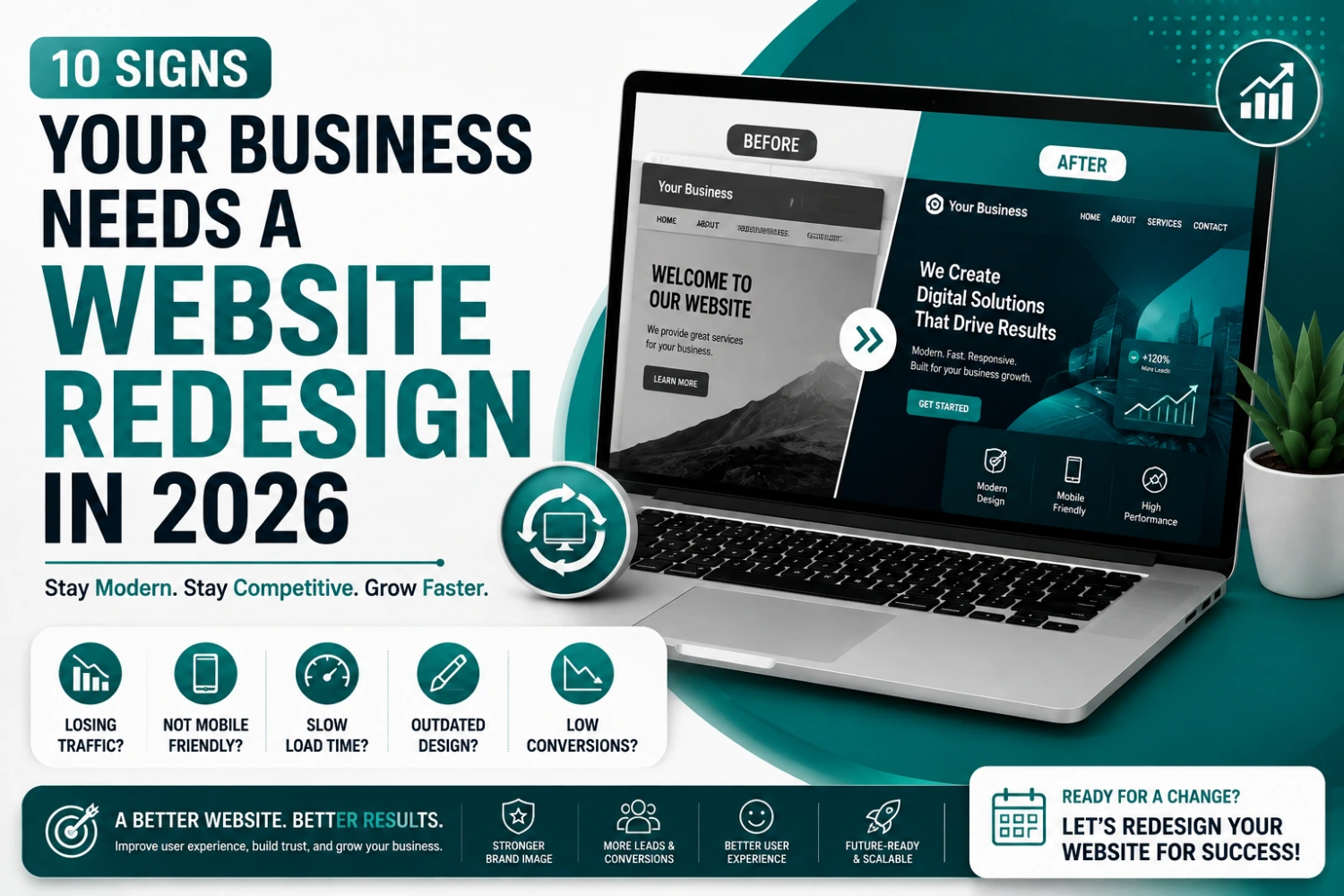
If you've been wondering whether it's time for an upgrade, here are ten signs your website may benefit from a website redesign.
1. Your Website Looks Outdated
Design trends change over time, but professionalism never goes out of style. An outdated website can make visitors question whether your business is active or keeping up with industry standards.
Modern websites typically feature:
- Clean layouts
- Simple navigation
- High-quality visuals
- Consistent branding
- Easy-to-read typography
- Plenty of white space
A refreshed design helps create a stronger first impression and builds confidence in your business.
2. Your Website Isn't Mobile Friendly
Most people browse the internet using smartphones. If visitors have to zoom in, scroll sideways, or struggle to tap buttons, they're likely to leave.
A responsive website design automatically adapts to different screen sizes, making it easier for users to navigate on phones, tablets, and desktops.
3. Your Website Loads Slowly
Website speed plays an important role in user experience. Slow pages can frustrate visitors and increase the likelihood that they leave before viewing your content.
Improving loading times often includes:
- Compressing images
- Removing unnecessary scripts
- Optimizing code
- Using reliable hosting
- Enabling browser caching
A faster website creates a smoother experience for visitors. Ongoing website maintenance can also help protect performance after launch.
4. You're Not Getting Enough Leads
Your website should encourage visitors to take action. If you're receiving traffic but very few inquiries, quote requests, or phone calls, the issue may not be the number of visitors but how effectively your website converts them.
Review whether your website includes:
- Clear calls to action
- Easy-to-find contact information
- Trust-building content
- Simple inquiry forms
Small improvements can make it easier for visitors to become customers.
5. Your Business Has Changed
Businesses evolve over time. Perhaps you've added new services, expanded into new markets, or updated your branding. If your website no longer reflects your current business, it may create confusion for potential customers.
Your website should accurately represent your services, team, brand identity, contact information, and business goals.
6. Your Competitors Have Better Websites
Potential customers often compare several businesses before making a decision. If competing companies offer a smoother online experience, visitors may choose them instead.
Review competitor websites and ask yourself:
- Is their design more modern?
- Is their navigation easier?
- Do they explain their services more clearly?
- Is it easier to contact them?
A redesign can help your business remain competitive without copying others.
7. Your Website Isn't Optimized for Search Engines
Search engine optimization starts with your website. Older websites may have technical issues that affect visibility, including poor page structure, missing metadata, slow loading speeds, broken links, duplicate content, and weak internal linking.
A redesign offers an opportunity to build a stronger SEO foundation with support from SEO services and modern web design.
8. Visitors Leave Without Taking Action
High bounce rates don't always mean your website is failing, but they can indicate that visitors aren't finding what they expected.
Consider whether your website clearly communicates what you do, who you help, why customers should choose you, and what they should do next. Every page should guide visitors toward a meaningful next step.
9. Updating Your Website Is Difficult
If making simple updates requires technical assistance every time, your website may be holding your business back.
Modern content management systems make it easier to publish blog posts, update services, replace images, edit text, and add new pages. Keeping content fresh becomes much more manageable with the right website development foundation.
10. Your Website Doesn't Reflect Your Brand
Your website should reinforce your brand at every touchpoint — including logo, colors, typography, images, tone of voice, and messaging. A consistent brand experience helps customers recognize and remember your business.
Benefits of a Website Redesign
A well-planned redesign can help improve many aspects of your online presence. Potential benefits include:
- Better user experience
- Faster loading pages
- Improved mobile responsiveness
- Easier navigation
- Stronger search engine visibility
- More effective lead generation
- Better accessibility
- Simplified content management
- Greater customer confidence
The goal isn't simply to create a more attractive website. It's to build a website that supports your business objectives.
How to Plan a Successful Website Redesign
Before beginning a redesign, ask yourself:
- What are my business goals?
- Who is my target audience?
- Which pages perform well?
- Which pages need improvement?
- What actions do I want visitors to take?
- Are there new services I need to showcase?
Answering these questions early helps guide better decisions throughout the project.
Common Website Redesign Mistakes
Avoid these common mistakes:
- Focusing only on appearance
- Removing useful content without a plan
- Forgetting SEO during development
- Ignoring mobile users
- Using unclear calls to action
- Publishing without testing
- Neglecting website speed
A successful redesign balances design, functionality, performance, and usability.
Final Thoughts
Your website should evolve alongside your business. If it's outdated, difficult to use, or no longer supports your goals, a redesign may help create a better experience for both visitors and your team.
Rather than focusing solely on appearance, consider how your website performs, how easily customers can interact with it, and whether it reflects the quality of your business today.
A thoughtful redesign can position your business for future growth while making it easier for potential customers to connect with you. Request a free proposal to get started with website redesign services.
Related reading: How Much Does a Small Business Website Cost in 2026? and Why Every Small Business Needs a Professional Website in 2026.
Frequently Asked Questions
- How often should a business redesign its website?
- There isn't a fixed schedule. Many businesses evaluate their websites every few years or whenever significant changes occur, such as new branding, expanded services, or changing customer expectations.
- Will redesigning my website improve SEO?
- A redesign can strengthen your website's technical foundation and user experience. Maintaining or improving search performance also depends on preserving valuable content, optimizing pages, and following SEO best practices during the redesign.
- Can I redesign my website without changing my brand?
- Yes. Some redesigns focus primarily on improving usability, performance, and functionality while keeping existing branding consistent.
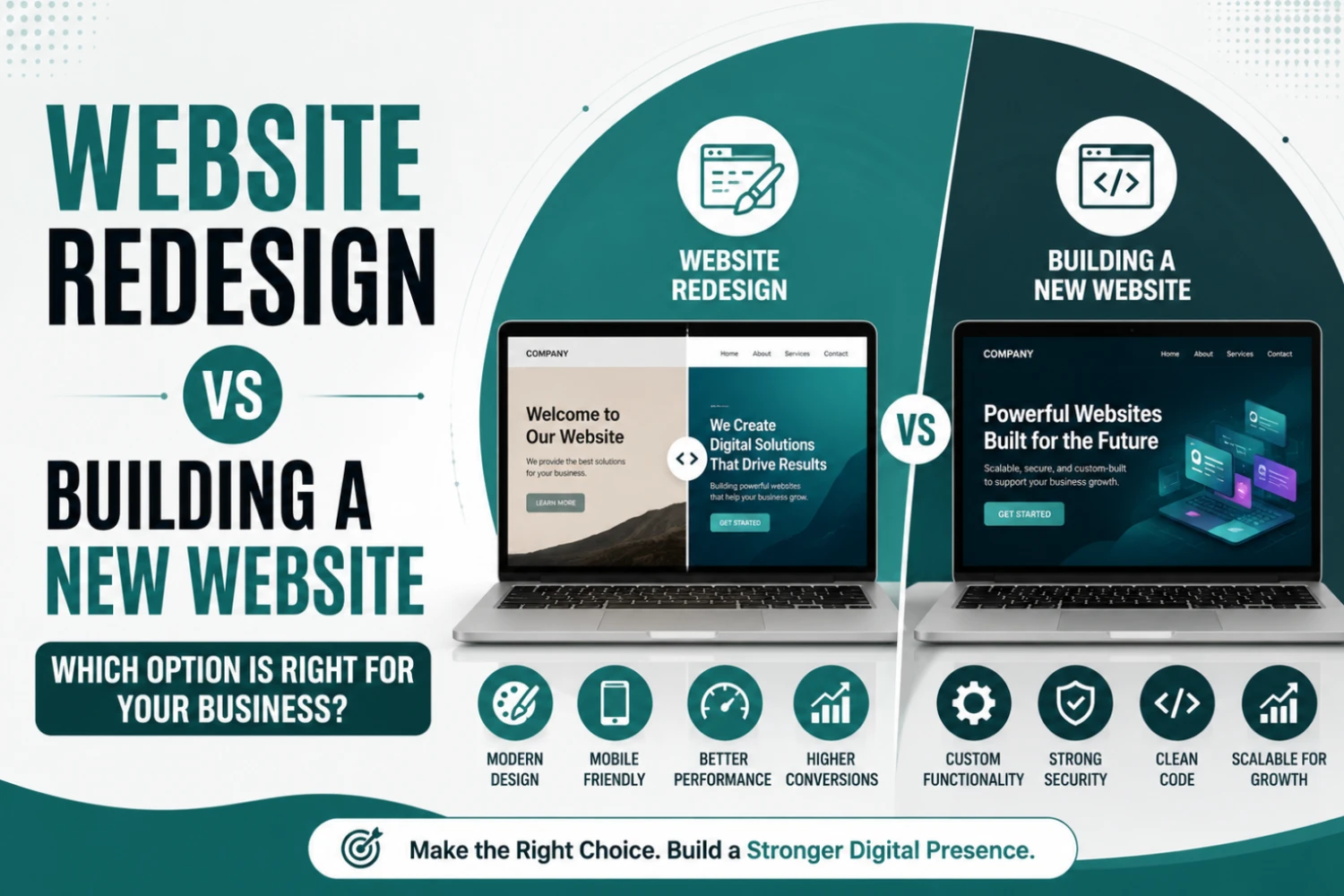
- Should I redesign or rebuild my website?
- That depends on the condition of your current website. Minor updates may be enough in some cases, while older websites with technical limitations may benefit from a more comprehensive rebuild.