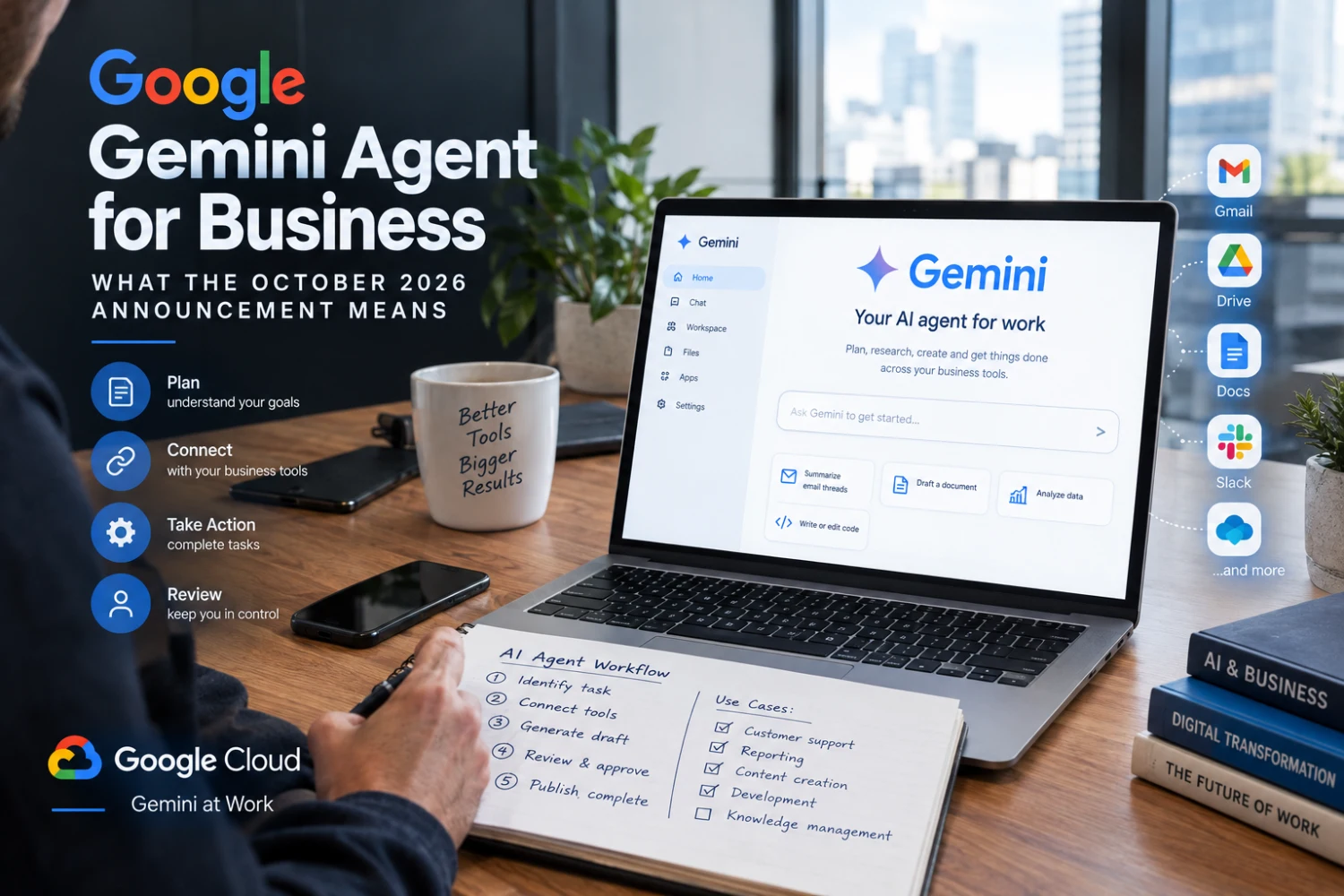
Google Gemini Agent for Business: What the October 2026 Announcement Means
Google Cloud introduced the Gemini agent in October 2026. Here's what AI workflow automation could mean for small businesses — and what to prepare first.
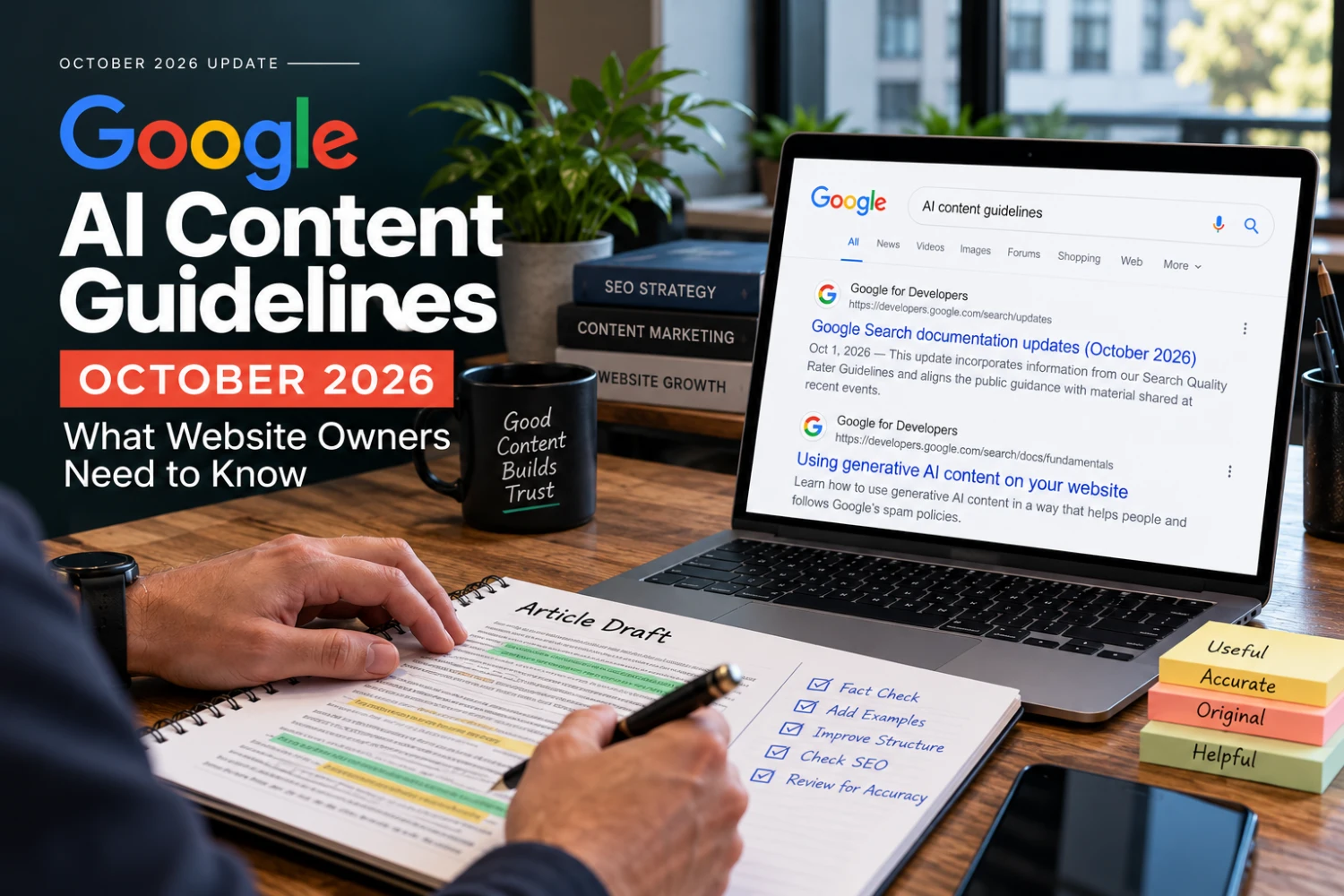
AI can draft an article in seconds. But can that article help your business appear in Google Search? The answer depends much more on what the page contributes than on how quickly it was produced.
On October 1, 2026, Google updated its documentation about using generative AI content on websites. According to Google's documentation changelog, the revision incorporated information from its Search Quality Rater Guidelines and aligned the public guidance with material used at developer events. This was a documentation update, not an announcement that all AI-written content would be penalized.
For small businesses publishing blog posts, location pages, product descriptions, and service content, the distinction matters.
Google's current guidance recognizes that generative AI can help with research and structuring original material. It also warns that producing many pages without adding value can violate its scaled content abuse spam policy.
Google's documentation points readers toward Search Quality Rater Guidelines sections discussing scaled content abuse and content with little effort, originality, or added value. Importantly, quality rater evaluations do not directly determine a page's ranking.
Official sources: Google Search documentation updates, October 2026 and Google's guidance on using generative AI content.
No. The issue is not simply whether AI helped write the content. The concern is publishing material designed primarily to manipulate rankings, particularly at scale and without meaningful value for readers.
A business might use AI to outline a guide, simplify technical language, or organize interview notes. Those uses are different from automatically producing hundreds of nearly identical pages that offer no genuine insight.
AI can invent statistics, misstate regulations, and cite nonexistent sources. Check dates, pricing, product features, and legal or medical claims before publishing.
A Long Island business should not create interchangeable pages for Garden City, Mineola, Hempstead, and Hicksville merely by swapping town names. Location pages need real, distinct information relevant to customers in those communities.
A page that simply paraphrases existing search results gives readers little reason to choose your website. Add expertise, useful examples, original explanations, process details, and answers to actual customer questions.
Avoid fabricated customer stories, fake testimonials, invented results, and promises of first-place Google rankings. Credibility is especially important for professional service businesses.
A visitor searching for website maintenance pricing wants a clear explanation of what affects cost. They do not need a long introduction repeating the phrase "website maintenance" in every paragraph.
Imagine a roofing company preparing a guide about choosing replacement shingles. AI might help structure the article, but the business should contribute its actual process, explain relevant material considerations, include authentic project photos where permission allows, and review the text for accuracy.
Similarly, a web agency can publish an AI-assisted article about site speed, but the strongest version should explain real technical causes, practical diagnostic steps, and when a business should seek professional help.
Before publishing, ask:
It reinforces the need to build on strong SEO fundamentals. Google's guidance for generative AI search continues to emphasize valuable content and established technical SEO practices. There is no special shortcut that guarantees placement in AI Overviews or AI Mode.
For Cheapoweb's target audience, the opportunity is to combine efficient content workflows with editorial judgment, sound website architecture, and real business expertise.
Google's October 2026 documentation update is a reminder that AI can help create content, but it does not replace accuracy, originality, or usefulness. Businesses should focus on answering customer questions well rather than publishing at maximum volume.
Want help improving AI-written pages or building a stronger content and SEO foundation? Pair this with our guides on local SEO for Long Island businesses and ranking higher on Google Maps in Nassau County, or explore content marketing. Contact Cheapoweb for a website content and SEO review.
Want to improve your existing AI-written content, service pages, or local SEO strategy? Ask Cheapoweb for a website content and SEO review focused on quality, usability, and sustainable growth.
GET A FREE PROPOSAL← Back to all articlesGoogle Cloud introduced the Gemini agent in October 2026. Here's what AI workflow automation could mean for small businesses — and what to prepare first.
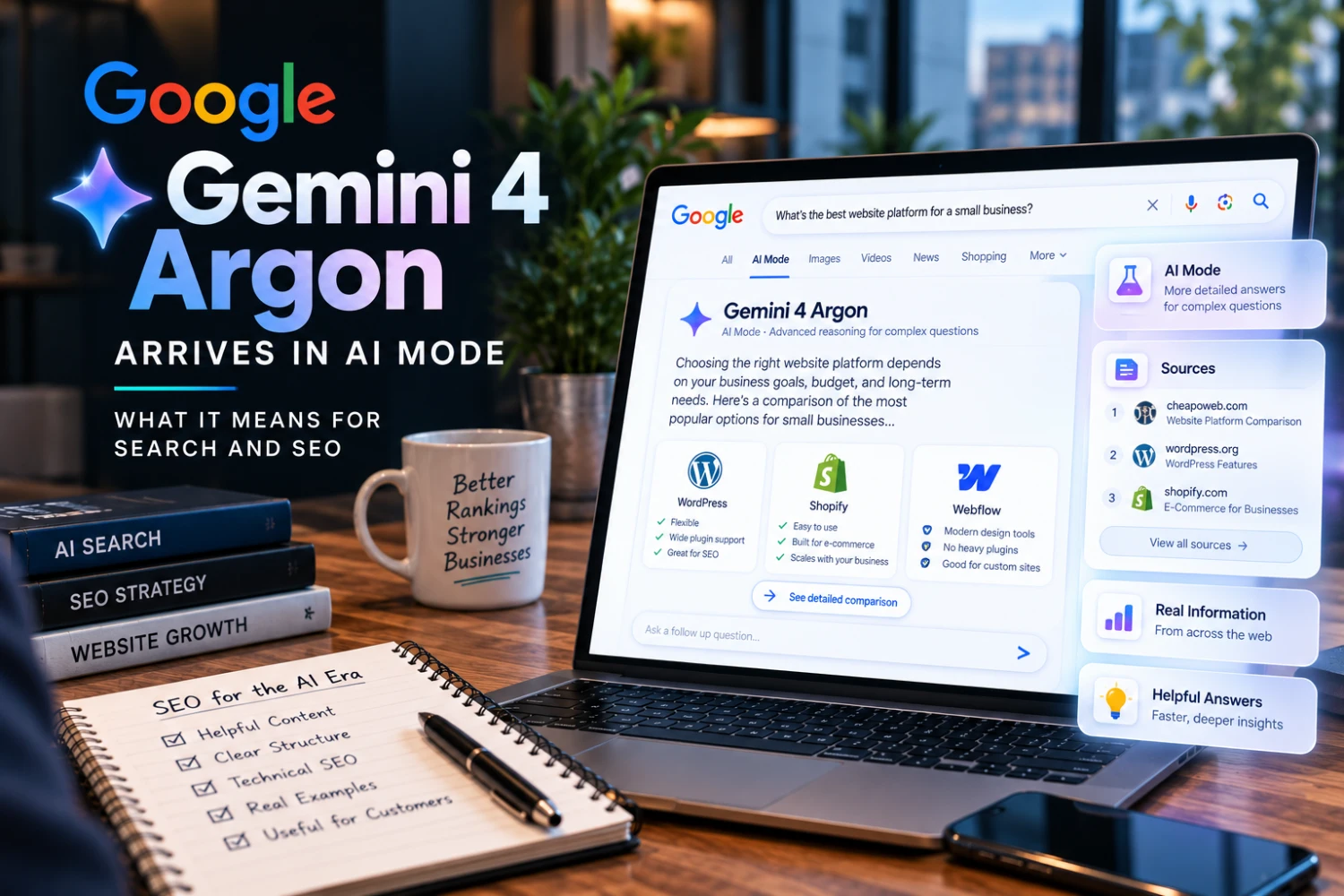
Google expanded Gemini 4 Argon access in October 2026, including AI Mode in Search for eligible subscribers. Here's what it means for SEO and business websites.
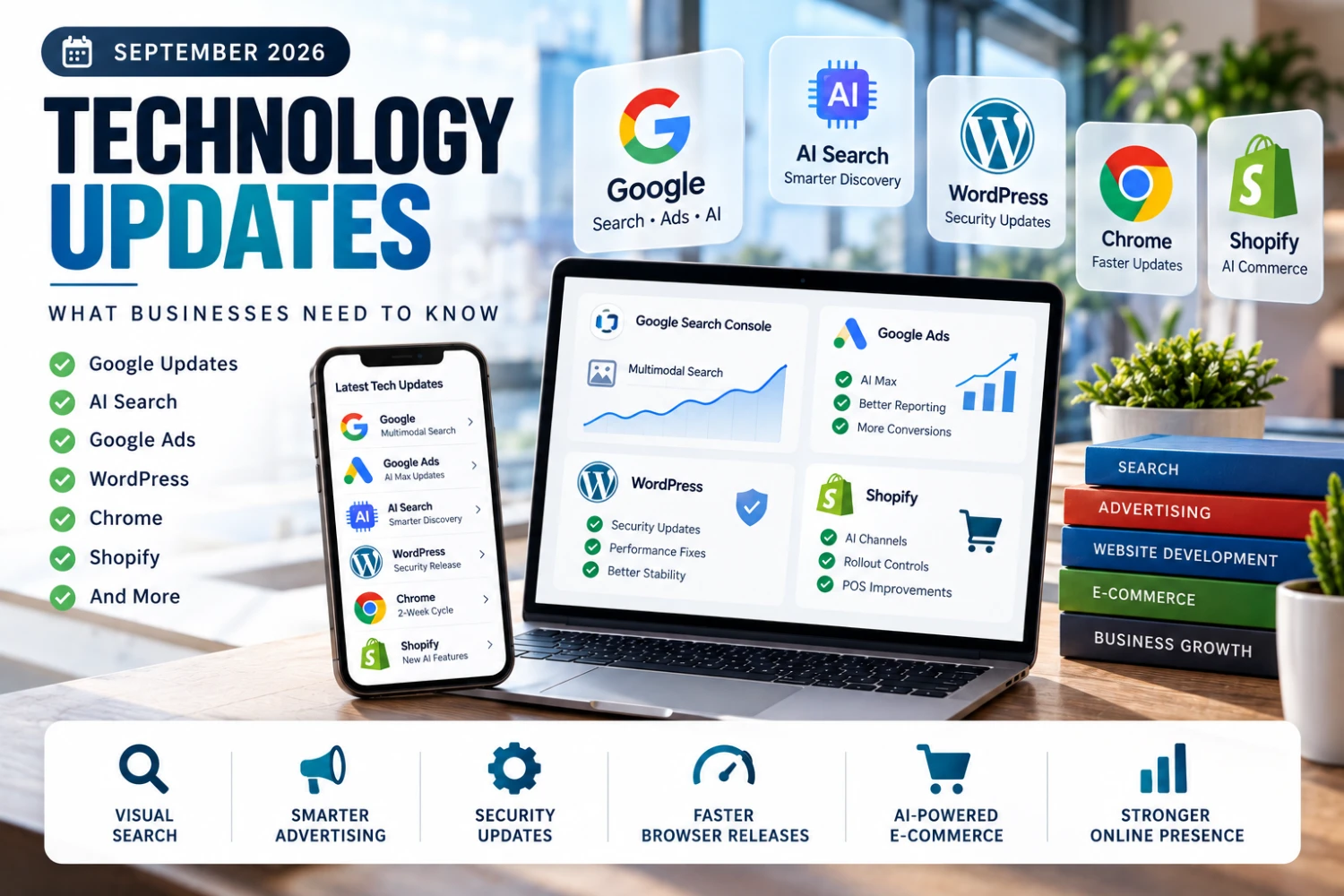
September 2026 brought major updates from Google Search Console, Google Ads, Chrome, WordPress, and Shopify — here's what business owners and marketers need to know.
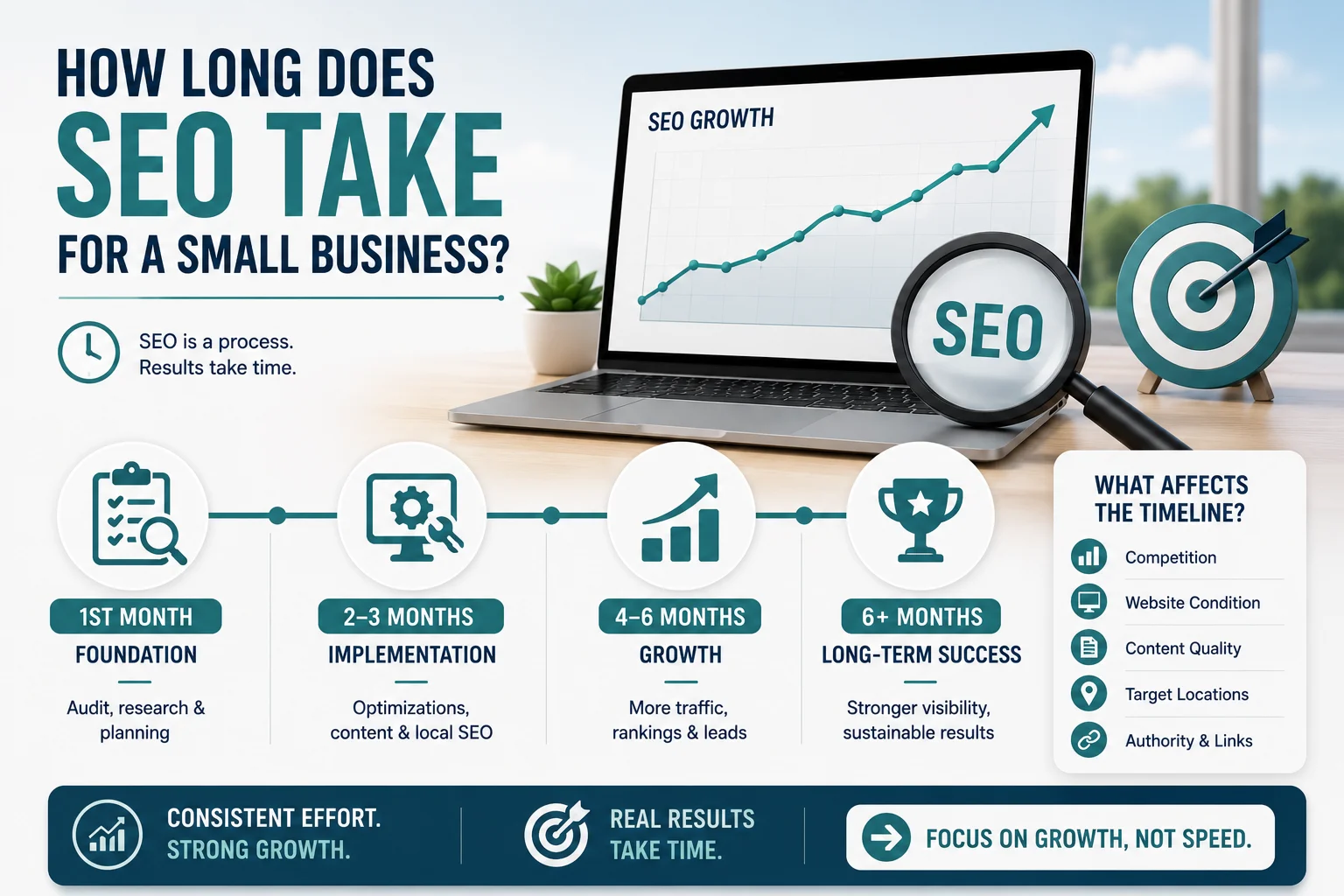
How long does SEO take for a small business? Learn why results vary, what to expect in the first months, and how to measure progress beyond rankings alone.
GET STARTED