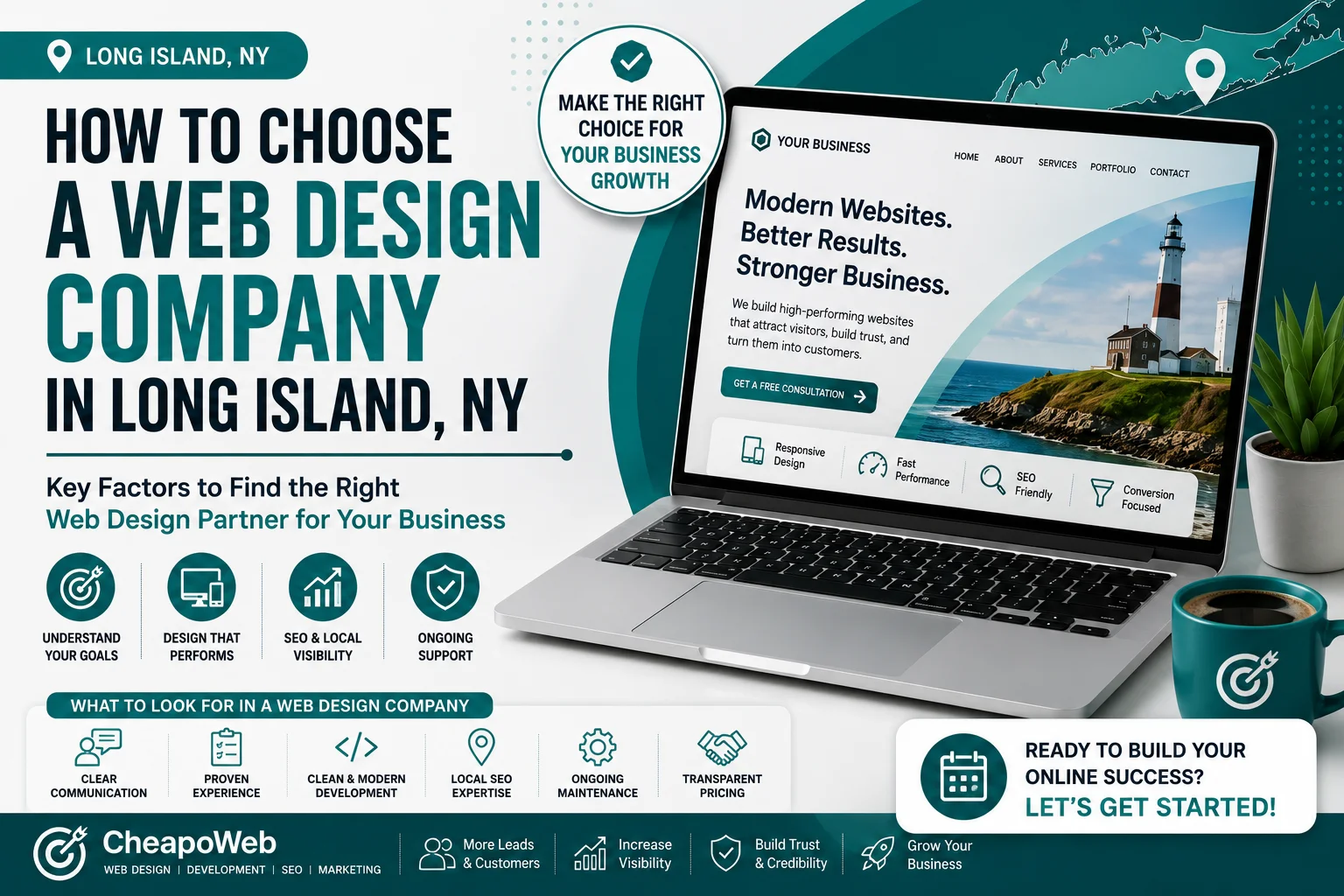
Choosing a web design company can feel overwhelming, especially when almost every agency promises attractive websites, better performance, and business growth.
For a Long Island business, however, your website has a bigger job than simply looking professional.
It needs to help potential customers understand what you offer, trust your business, find the information they need, and take the next step.
That means the right web design partner should understand more than colors, layouts, and code. They should understand usability, mobile performance, search engine optimization (SEO), conversion strategy, website maintenance, and how your website fits into your broader marketing goals.
So, how do you choose the right web design company in Long Island?
Here are the factors worth considering before making your decision.
1. Start With Your Business Goals, Not the Design
Before comparing web design companies, determine what you actually need your website to accomplish.
Are you trying to:
- Generate more phone calls?
- Receive more quote requests?
- Improve your visibility in Google?
- Sell products online?
- Replace an outdated website?
- Promote multiple services?
- Reach customers throughout Nassau County or other parts of Long Island?
- Build greater trust in your business?
Your goals should influence how the website is planned.
A beautiful website that doesn't support your business objectives can still be a poor investment.
When speaking with a web design company, pay attention to whether they immediately discuss colors and layouts or first try to understand your business, audience, competition, and goals.
2. Look Beyond the Homepage
A polished homepage is important, but it isn't enough.
Your customers may enter your website through a service page, blog article, location page, Google search result, or advertisement.
A professional web design company should think about the entire customer journey.
That includes:
- Homepage structure
- Service pages
- Navigation
- Contact pages
- Calls to action
- Mobile experience
- Forms
- Blog content
- Local landing pages
- Internal linking
Every important page should have a clear purpose.
For example, someone landing on a web development service page should quickly understand what is offered, who the service is for, and how to get more information.
3. Review Their Portfolio Carefully
A portfolio can tell you a lot about a web design company.
Don't simply ask whether the websites look attractive.
Look deeper.
Ask yourself:
- Are the websites easy to understand?
- Can you quickly identify what each business offers?
- Is the navigation intuitive?
- Are important calls to action visible?
- Do the websites work well on mobile devices?
- Does each website have its own identity?
- Do different projects look customized to the businesses they represent?
If every website looks almost identical, the agency may be relying heavily on the same templates.
Templates aren't automatically bad, but your website should still reflect your business, customers, and objectives.
4. Make Sure Mobile Design Is a Priority
Mobile responsiveness should be a basic requirement in 2026.
Potential customers may discover your company while sitting at home, commuting, comparing businesses, or searching for a nearby service from their phones.
Your website should make it easy for mobile visitors to:
- Read your content
- Navigate between pages
- Tap your phone number
- Submit a form
- View services
- Find your location
- Take the next step
Don't settle for a desktop website that has simply been squeezed onto a smaller screen.
Mobile usability should be considered throughout the design process.
5. Ask About Website Speed
A visually impressive website isn't particularly useful if visitors become frustrated waiting for it to load.
Website performance should therefore be part of the development process rather than an afterthought.
Ask prospective developers how they approach:
- Image optimization
- Code efficiency
- Hosting
- Caching
- Third-party scripts
- Mobile performance
- Core Web Vitals
Animations and visual effects can enhance a website when used appropriately, but they shouldn't come at the expense of usability and performance.
6. Choose a Company That Understands SEO
Web design and SEO shouldn't exist in completely separate worlds.
Your site's structure can affect how easily search engines understand your content and how easily visitors find what they're looking for.
An SEO-conscious web development process may consider:
- Page titles
- Heading structure
- URL structure
- Internal links
- Mobile usability
- Page speed
- Image optimization
- Indexability
- Structured content
- Location relevance
If organic search is important to your business, ask how SEO is considered during development.
A website shouldn't need to be rebuilt immediately after launch simply because SEO wasn't considered from the beginning.
7. Consider Their Understanding of Local SEO
If you serve customers in Long Island, Nassau County, or specific nearby communities, local visibility can be particularly valuable.
Local SEO isn't about repeating a city name dozens of times on a page.
A better approach involves creating useful, relevant information that clearly communicates where you operate and what you provide.
Depending on your business, that could involve:
- Optimized service pages
- Location pages
- Google Business Profile optimization
- Consistent business information
- Local content
- Customer reviews
- Local links and citations
Your website and local search presence should support each other.
8. Ask Who Will Own the Website
This is an important question that business owners sometimes overlook.
Before signing an agreement, understand what happens after the project is completed.
Ask questions such as:
- Who owns the website?
- Who owns the domain?
- Will I have administrator access?
- Can I move the website later?
- Who controls the hosting account?
- Will I receive my website files and credentials where applicable?
- Are there ongoing contractual requirements?
These details should be clear before work begins.
9. Understand Exactly What's Included
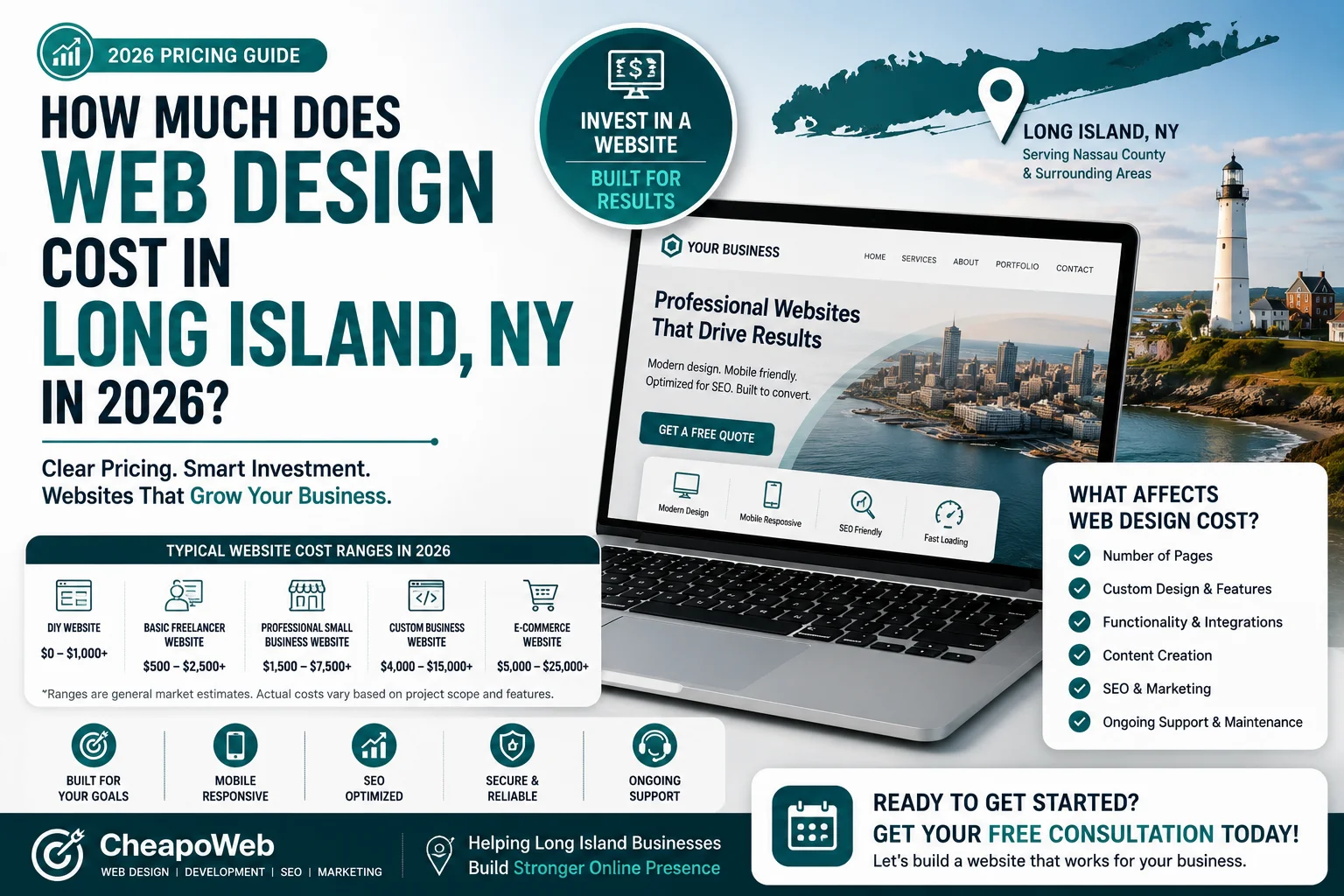
Two website proposals can have very different prices because they may include completely different services.
One proposal might cover only design and development.
Another might include:
- Copywriting
- SEO setup
- Analytics
- Website speed optimization
- Content migration
- E-commerce functionality
- Forms
- Training
- Maintenance
- Hosting
- Branding
Instead of asking only, "How much does the website cost?" ask:
"What exactly is included in this price?"
Understanding the scope makes proposals much easier to compare.
10. Ask About the Development Platform
Different businesses have different technical requirements.
Depending on the project, websites may be built using platforms and technologies such as WordPress, Shopify, React, Next.js, or custom development frameworks.
There isn't one platform that's automatically best for every business.
The right choice depends on factors including:
- Website functionality
- E-commerce requirements
- Scalability
- Content management
- Integrations
- Budget
- Maintenance requirements
- Long-term goals
A good development company should be able to explain why it recommends a particular technology instead of simply using the same solution for every client.
11. Evaluate Communication
Technical ability matters, but communication can have just as much impact on your experience.
During your initial conversations, consider:
- Are your questions answered clearly?
- Do they explain technical topics without unnecessary jargon?
- Do they ask questions about your business?
- Is the project process explained?
- Do you know who your contact person will be?
- Are expectations realistic?
Building a website usually requires collaboration.
Clear communication makes that process significantly easier.
12. Don't Choose Based Only on Price
Budget matters, particularly for small businesses.
But choosing the lowest quote without considering what you're receiving can create additional costs later.
An inexpensive website may become expensive if it eventually requires major work because of poor performance, limited functionality, difficult content management, weak SEO foundations, or inadequate support.
Instead of searching only for the cheapest option, compare overall value.
Consider:
- Quality
- Experience
- Scope
- Support
- Technology
- SEO knowledge
- Communication
- Long-term flexibility
The goal should be finding a website solution that makes sense for your business and budget.
13. Look for Conversion-Focused Thinking
Getting visitors to your website is only part of the challenge.
What happens after they arrive?
A conversion-focused website makes the next step obvious.
Depending on the business, that could mean encouraging someone to:
- Call
- Request a quote
- Schedule an appointment
- Purchase a product
- Submit an inquiry
- Visit a location
Your web design company should think about calls to action, page hierarchy, trust signals, forms, and user journeys.
A website should guide visitors rather than leave them wondering what to do next.
14. Discuss Accessibility
Accessibility should be considered when designing and maintaining a business website.
Common considerations include:
- Readable typography
- Sufficient color contrast
- Keyboard-friendly navigation
- Descriptive alternative text for meaningful images
- Clearly labeled forms
- Logical page structure
Accessibility is not something an agency should casually "guarantee" through a plugin or single automated tool. Requirements can depend on the business and circumstances, so businesses with specific legal compliance concerns should seek appropriate professional guidance.
From a design perspective, however, creating a website that is easier for more people to use is simply good practice.
15. Find Out What Happens After Launch
Websites require ongoing attention.
Software changes. Content becomes outdated. Security issues emerge. Businesses introduce new services.
Before hiring a web design company, ask what happens after your website goes live.
Ongoing services may include:
- Website maintenance
- Backups
- Security monitoring
- Software updates
- Content changes
- Performance optimization
- SEO
- Digital marketing
- Technical support
Knowing who will support your website after launch can prevent problems later.
Local Agency or Remote Web Design Company?
You don't necessarily need to hire the agency closest to your office.
Remote collaboration has made it possible to work successfully with talented teams almost anywhere.
However, choosing a company familiar with Long Island can be helpful when local customers are an important part of your strategy.
A local-focused company may better understand the importance of searches involving Nassau County, Long Island communities, neighboring markets, and "near me" search behavior.
The deciding factor should still be whether the company understands your business and can deliver the services you actually need.
Red Flags to Watch for When Hiring a Web Design Company
Be cautious when you encounter claims or practices such as:
"We Guarantee You'll Rank #1 on Google"
No legitimate web design or SEO company controls Google's rankings.
Be skeptical of guaranteed ranking claims.
No Clear Scope of Work
You should understand what you're purchasing before the project starts.
No Portfolio or Examples
An established provider should generally be able to demonstrate relevant work or experience.
Unclear Ownership
Make sure ownership, access, hosting, and domain responsibilities are clearly explained.
No Mobile Strategy
Responsive design should be standard for modern business websites.
SEO Is Completely Ignored
Even if you're not purchasing an ongoing SEO campaign, the website should be built on a search-friendly technical foundation.
They Don't Ask About Your Business
It's difficult to create an effective business website without understanding the business behind it.
Questions to Ask a Long Island Web Design Company
Before making your final decision, consider asking:
- Have you worked with businesses similar to mine?
- What is included in your proposal?
- Will my website be mobile responsive?
- How do you approach SEO during development?
- How do you optimize website performance?
- Which platform do you recommend and why?
- Will I own my website after launch?
- Will I have access to the website and related accounts?
- Can I update content myself?
- What happens if I need support later?
- Do you offer website maintenance?
At Cheapoweb, we help Long Island and Nassau County businesses choose the right website approach — from custom web design and development to SEO foundations and ongoing maintenance. If you're evaluating agencies, we're happy to walk through goals, scope, and what a strong proposal should include.
Related reading: Web Design for Contractors in Long Island, Law Firm Web Design in Long Island, Restaurant Web Design in Long Island, Dental Web Design for Long Island Practices, and Real Estate Web Design in Long Island.