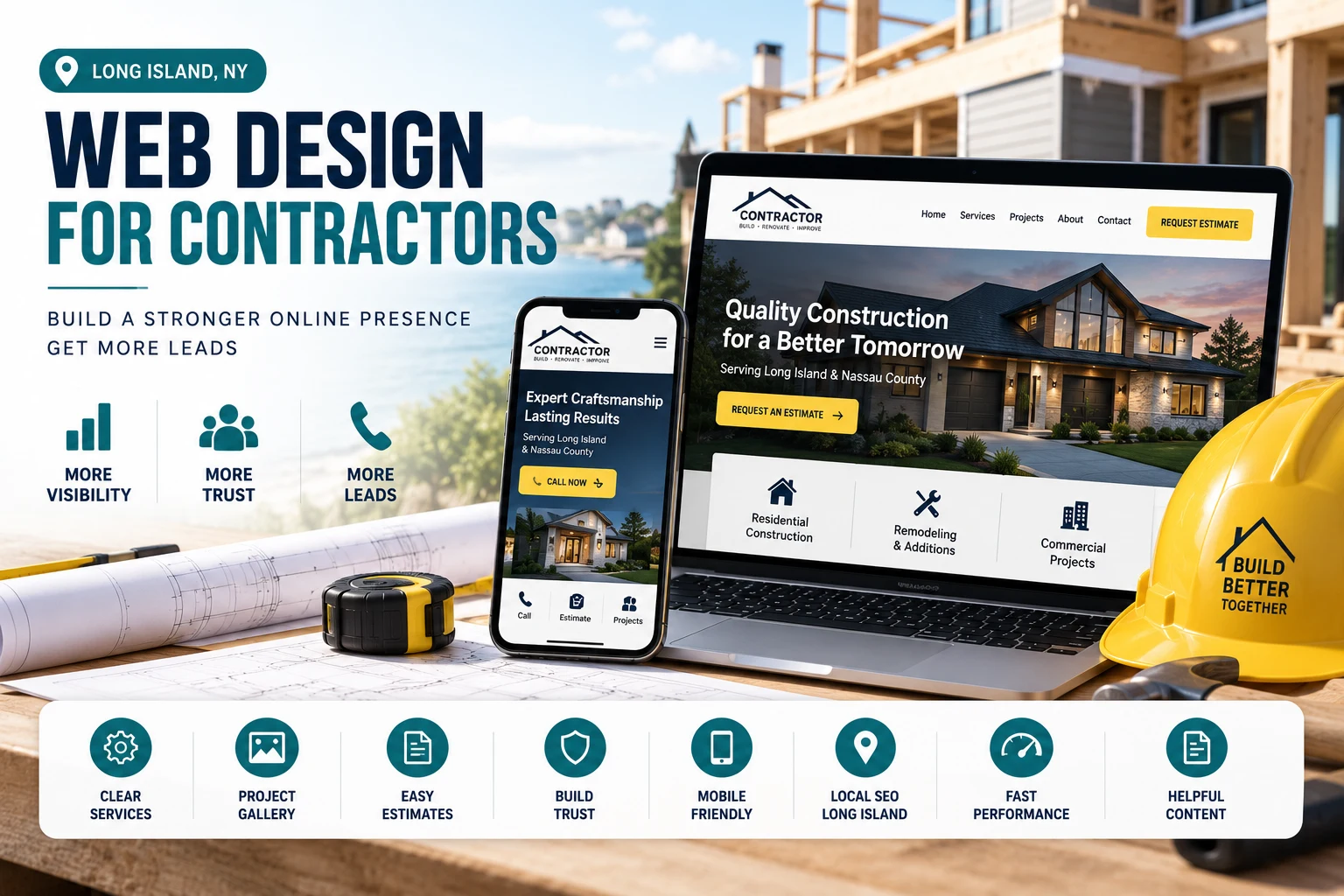
Web Design for Contractors in Long Island: What Your Website Needs to Generate More Leads
For Long Island contractors, a website should do more than list services — it should build trust quickly, show real work, and make estimate requests easy.
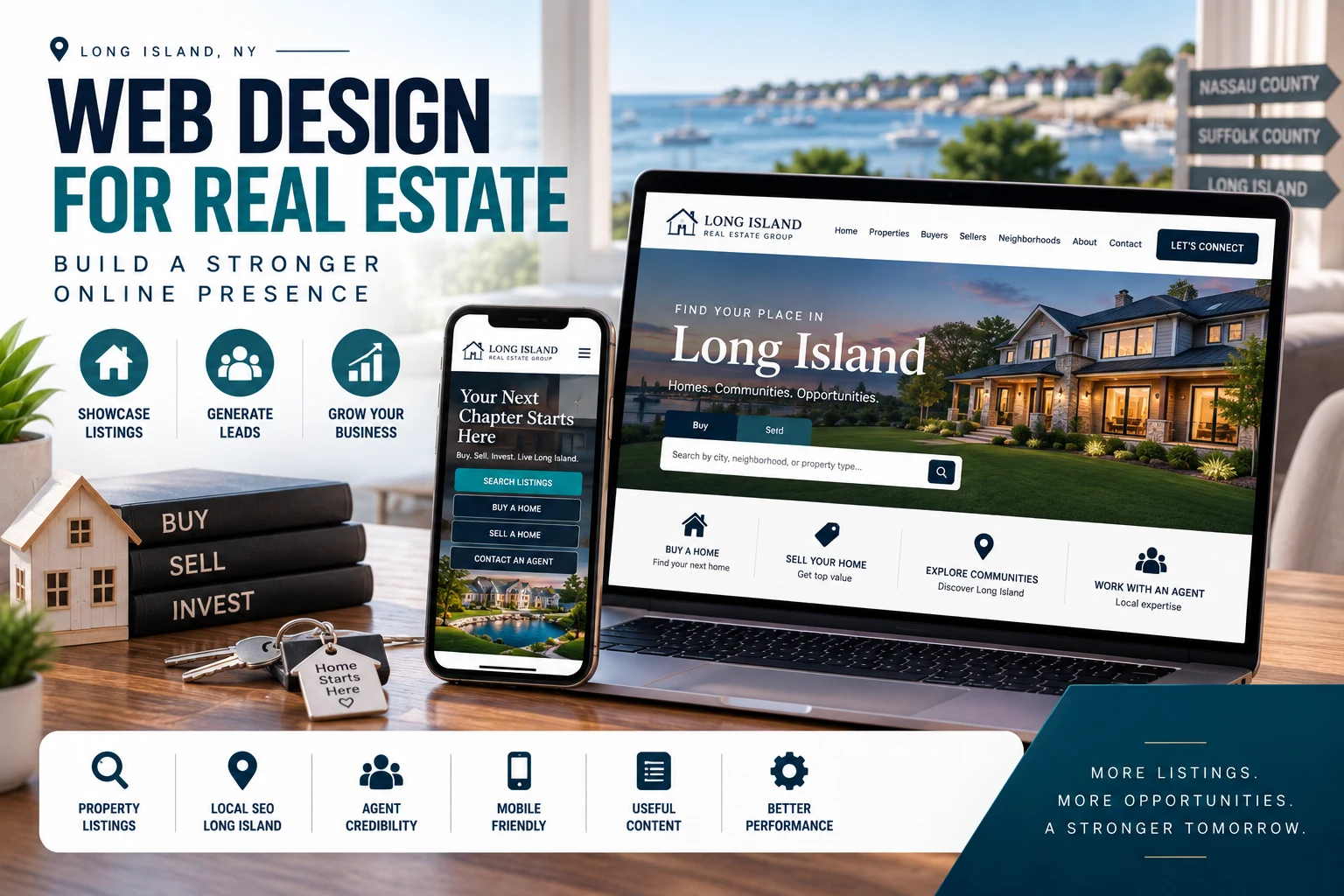
Real estate is highly competitive.
Buyers and sellers often research agents, brokers, properties, and neighborhoods online before contacting anyone.
That means a real estate website has to accomplish several things at once.
It should:
For Long Island real estate professionals, local knowledge should be reflected throughout the website. Strong web design helps turn that research into real conversations.
Your homepage should quickly answer:
Avoid generic messaging that could belong to any real estate company.
Property listings should be:
Depending on the business, you may need integration with listing or IDX systems.
The appropriate solution depends on the website's technical requirements and data access.
Real estate is naturally local.
Useful pages might cover:
Avoid unsupported claims such as labeling an area the "best" neighborhood for a particular demographic.
Housing marketing also needs to respect fair housing requirements and avoid discriminatory targeting or language.
Agent profile pages can include:
Keep information accurate and up to date.
A buyer and seller usually want different information.
Buyer Content
Seller Content
Separating these journeys makes the website easier to navigate.
Potential leads may want to:
Forms should request only information needed to begin the conversation.
Relevant search queries may include:
Your website can support local visibility through useful location pages, service content, strong technical SEO, and accurate business information. Explore SEO services and local SEO for Long Island small businesses to strengthen that foundation.
Large listing galleries can become heavy.
Optimize:
A property website should not become frustrating simply because it contains many photographs.
Outdated listings can create a poor customer experience.
Automated integrations may reduce manual updates where appropriate, but they should still be monitored.
Real estate businesses have many useful content opportunities.
Examples:
Content should be educational and avoid presenting changing financial or legal information without appropriate sourcing or qualification.
Real estate marketing has legal considerations.
Website content should avoid discriminatory language or targeting involving protected characteristics.
Businesses should also review applicable New York licensing, advertising, fair housing, privacy, and accessibility requirements with appropriate professionals when necessary.
A strong real estate website should combine listings with useful local information, professional branding, agent credibility, and easy communication.
For Long Island businesses, the website can become an important part of both lead generation and long-term brand building. If the site is outdated, a website redesign may be the right next step.
If your real estate website is outdated, difficult to manage, or not supporting your marketing goals, Cheapoweb can help evaluate its design, development, SEO, performance, and lead-generation structure. Also review how much web design costs in Long Island and how to choose a web design company in Long Island, NY.
Related reading: Web Design for Contractors in Long Island, Law Firm Web Design in Long Island, and Restaurant Web Design in Long Island.
If your real estate website is outdated, difficult to manage, or not supporting your marketing goals, Cheapoweb can help evaluate its design, development, SEO, performance, and lead-generation structure.
GET A FREE PROPOSAL← Back to all articlesFor Long Island contractors, a website should do more than list services — it should build trust quickly, show real work, and make estimate requests easy.
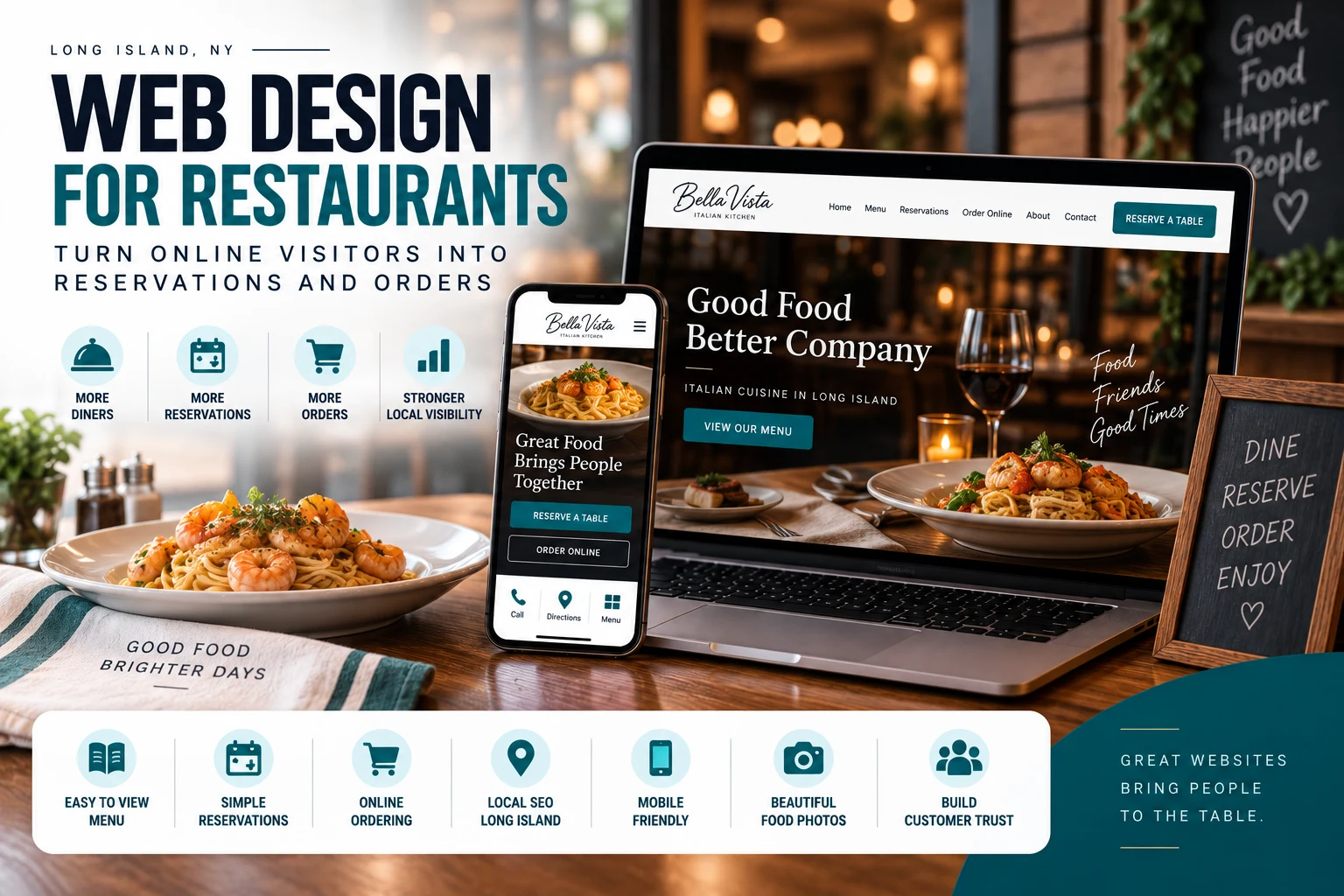
Restaurant customers decide fast. A Long Island restaurant website should make menus, hours, reservations, and online ordering easy — especially on mobile.

A Long Island law firm website must build confidence quickly — clear practice areas, credible attorney information, local visibility, and easy consultation options.
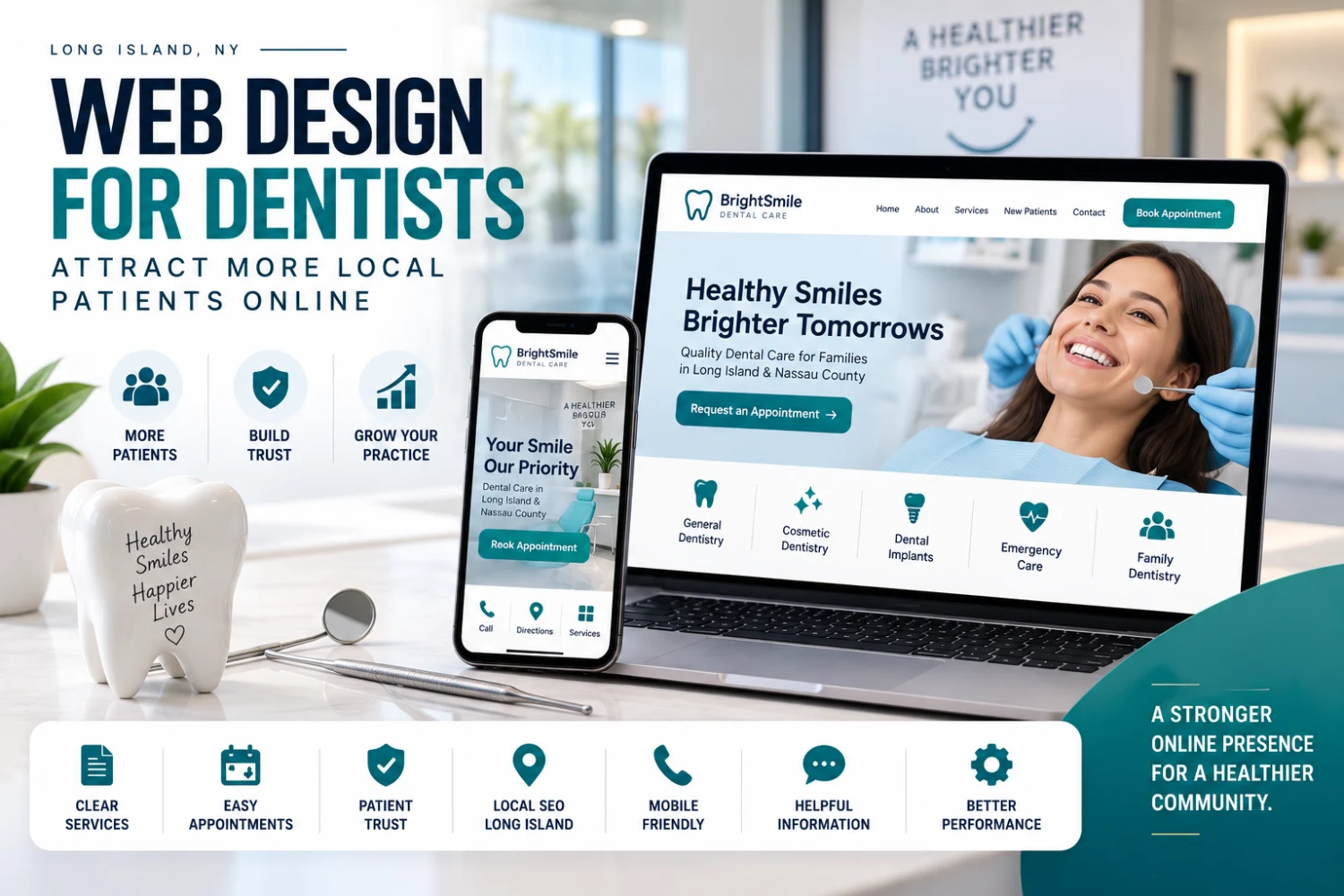
Patients research dental practices online before booking. A Long Island dental website should make services, trust signals, location details, and appointment requests easy to find.
GET STARTED