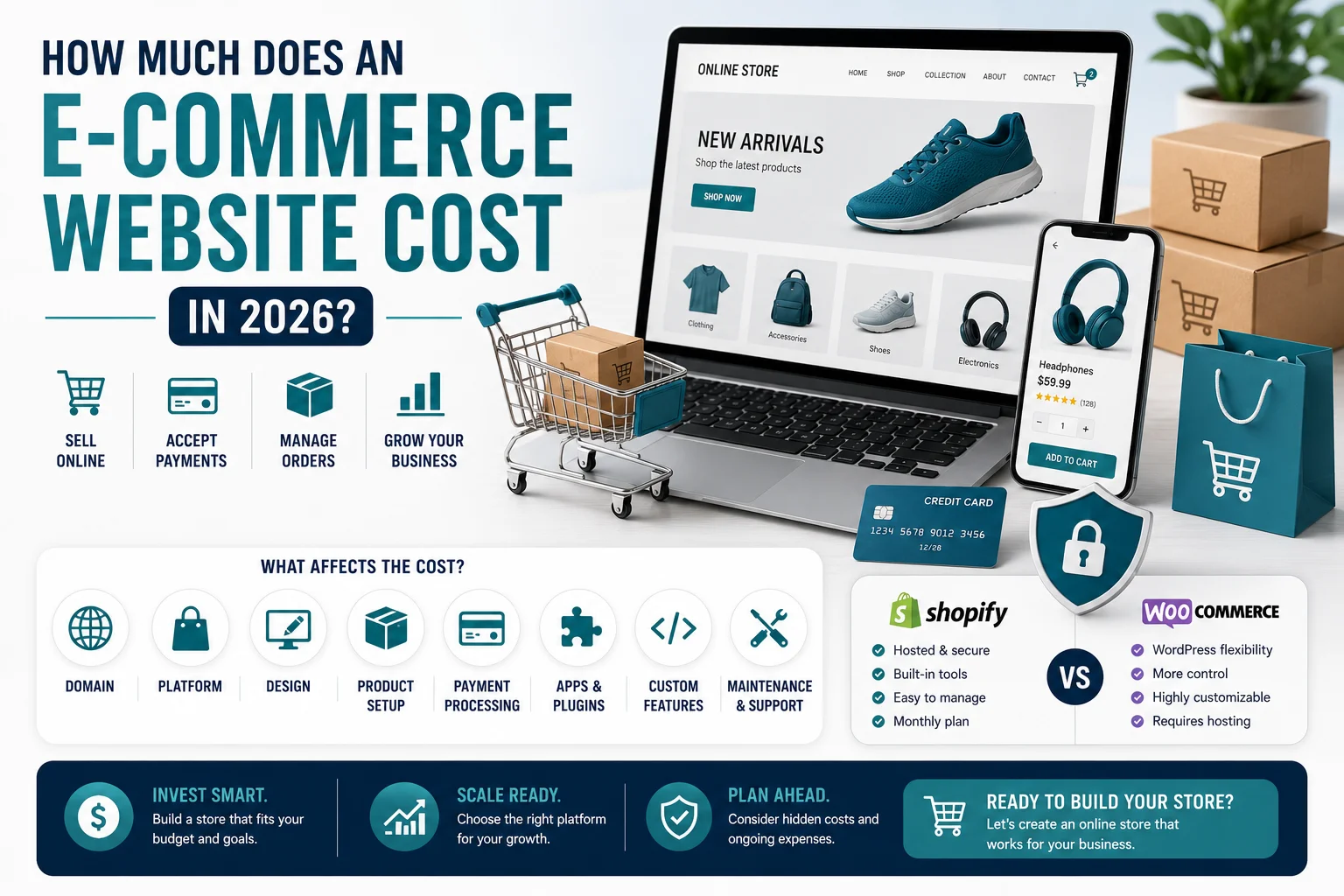
How Much Does an E-Commerce Website Cost in 2026?
Building an online store involves more than product pages. Learn what drives e-commerce website costs in 2026—from platforms and design to payments, apps, and hidden expenses.
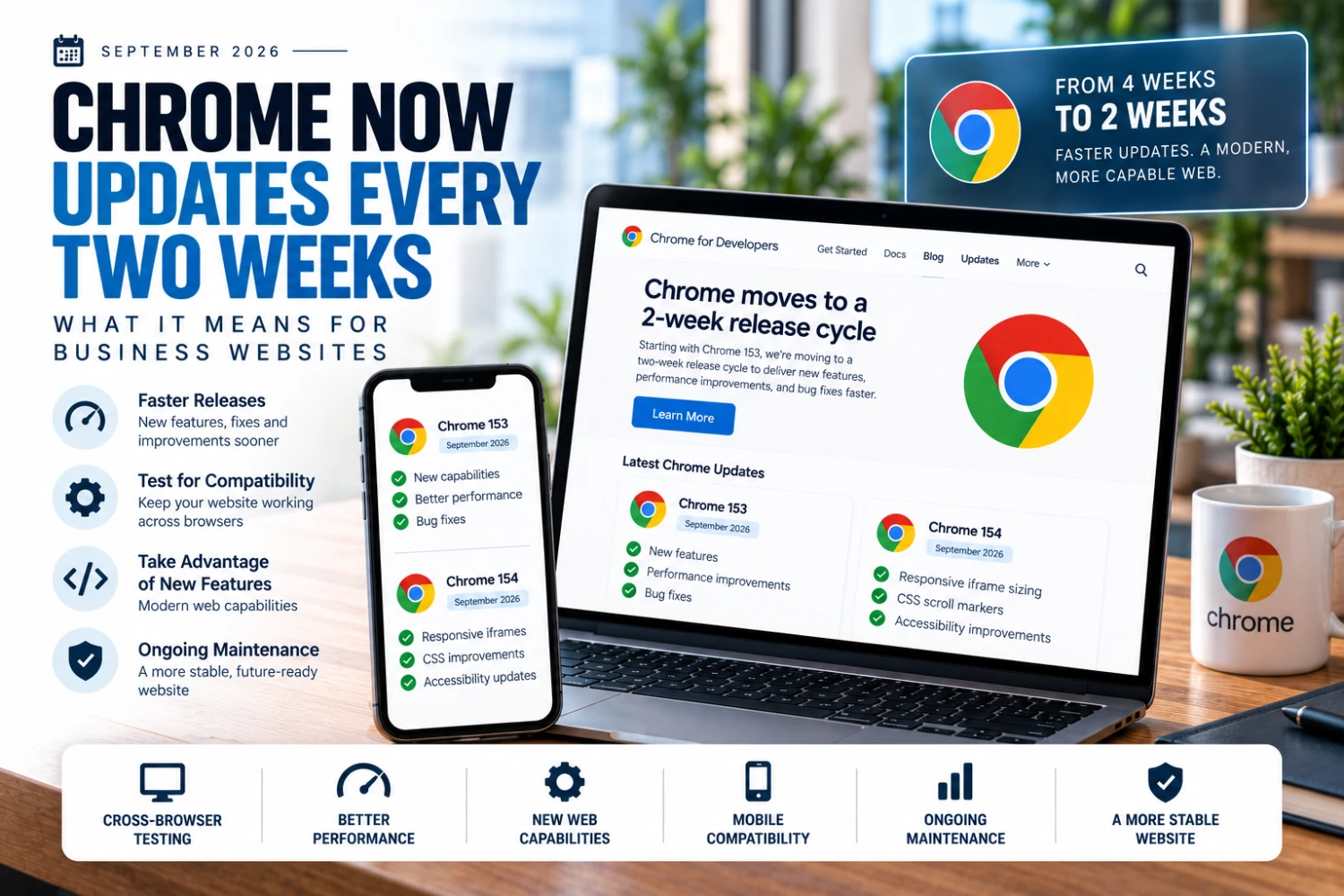
Web browsers are changing faster.
In September 2026, Google officially began moving Chrome from a four-week major release cycle to a two-week cycle, beginning with Chrome 153.
Source: Chrome for Developers — two-week start. This is one of several shifts covered in our September 2026 technology updates overview.
Google says the faster schedule is intended to deliver new capabilities, performance improvements, and bug fixes more quickly.
Chrome 153 arrived in early September, followed rapidly by Chrome 154 later in the month.
Sources: New in Chrome 153 and New in Chrome 154.
Websites now operate in an environment where browser behavior can evolve faster — continuous website maintenance matters more.
Developers should periodically test important websites across Chrome, Safari, Firefox, Edge, and mobile browsers.
Chrome 154 introduced support for responsively sized iframes, which can allow certain embedded documents to adapt more naturally without older JavaScript-based resizing methods.
Chrome 154 also expanded CSS scroll-marker capabilities with accessibility-related behaviors inspired by ARIA navigation and tab patterns.
Source: Chrome 154 release notes.
An outdated website may continue functioning for years, but over time it can accumulate old JavaScript, outdated frameworks, deprecated browser behavior, unsupported plugins, and compatibility issues.
Strong web development and page-speed optimization help prevent that drift.
Businesses with larger sites should consider staging environments, automated testing, performance monitoring, browser compatibility testing, and error monitoring — especially for e-commerce, SaaS, customer portals, booking systems, and custom web applications.
No. Most browser releases will not require every business to make immediate changes. The important point is having a website that is actively maintained rather than abandoned.
Chrome's faster release cycle reflects a broader change: the modern web evolves continuously. Website development should not be considered a one-time project.
If your website has not been technically reviewed in several years, contact Cheapoweb to evaluate browser compatibility, mobile usability, performance, and outdated technology.
Related reading: September 2026 Technology Updates and WordPress 7.1.2 Security Update.
If your website has not been technically reviewed in several years, Cheapoweb can help evaluate browser compatibility, mobile usability, performance, and outdated technology.
GET A FREE PROPOSAL← Back to all articlesBuilding an online store involves more than product pages. Learn what drives e-commerce website costs in 2026—from platforms and design to payments, apps, and hidden expenses.
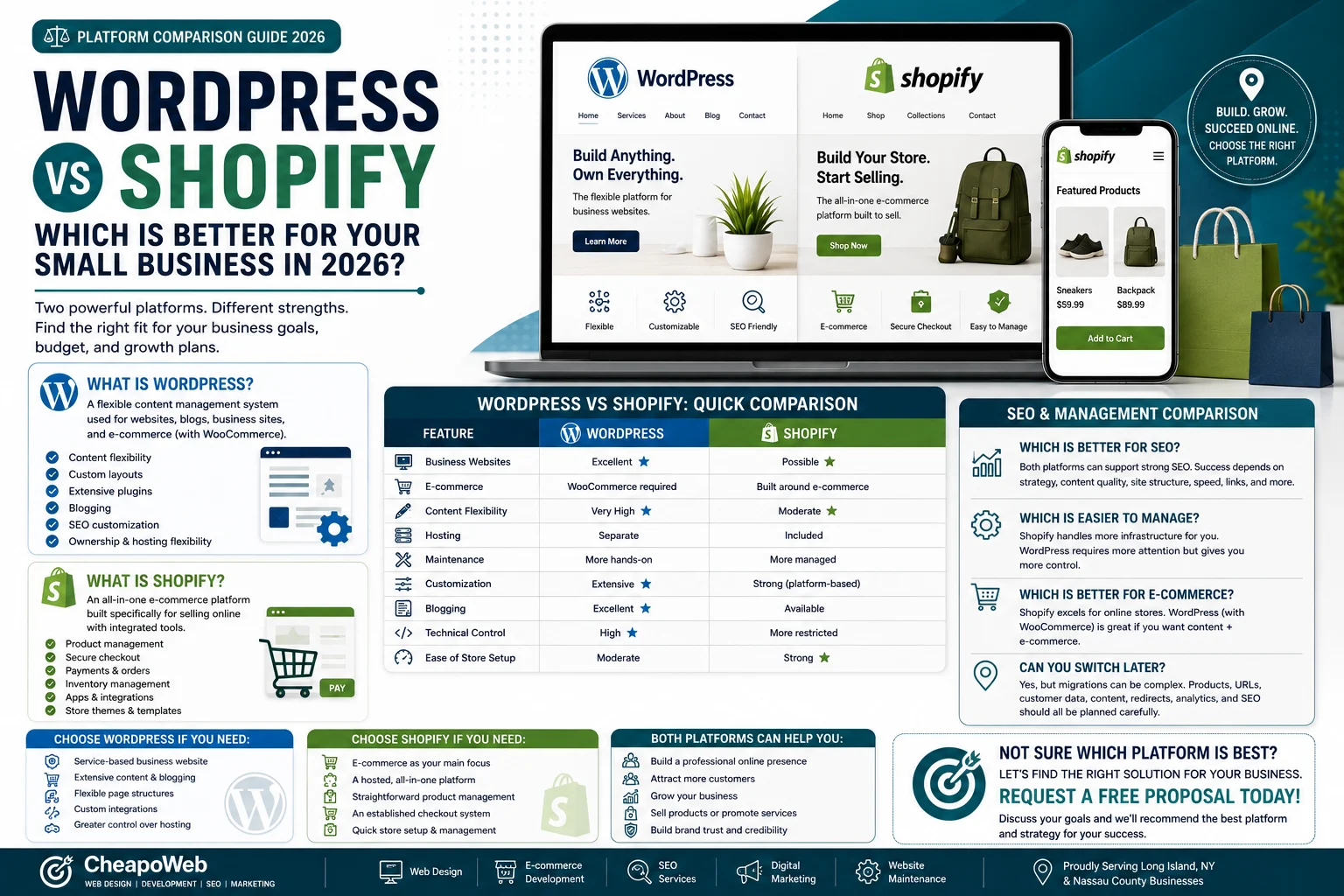
Choosing the platform behind your website is an important business decision. Compare WordPress and Shopify for e-commerce, flexibility, maintenance, SEO, and ease of use.
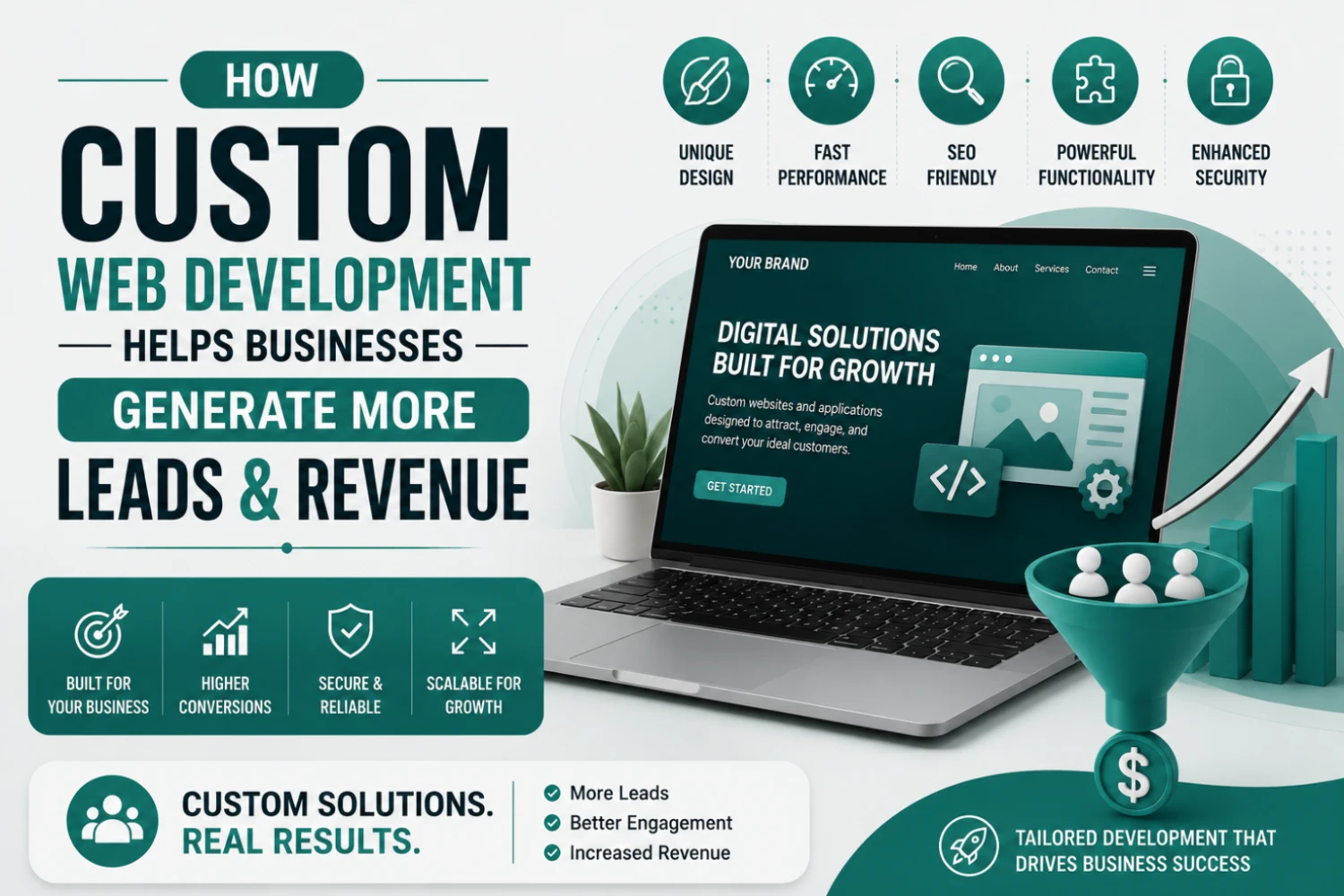
Your website is often the first interaction potential customers have with your business. Custom web development allows you to build unique digital experiences designed specifically around your goals, customers, and operational requirements.
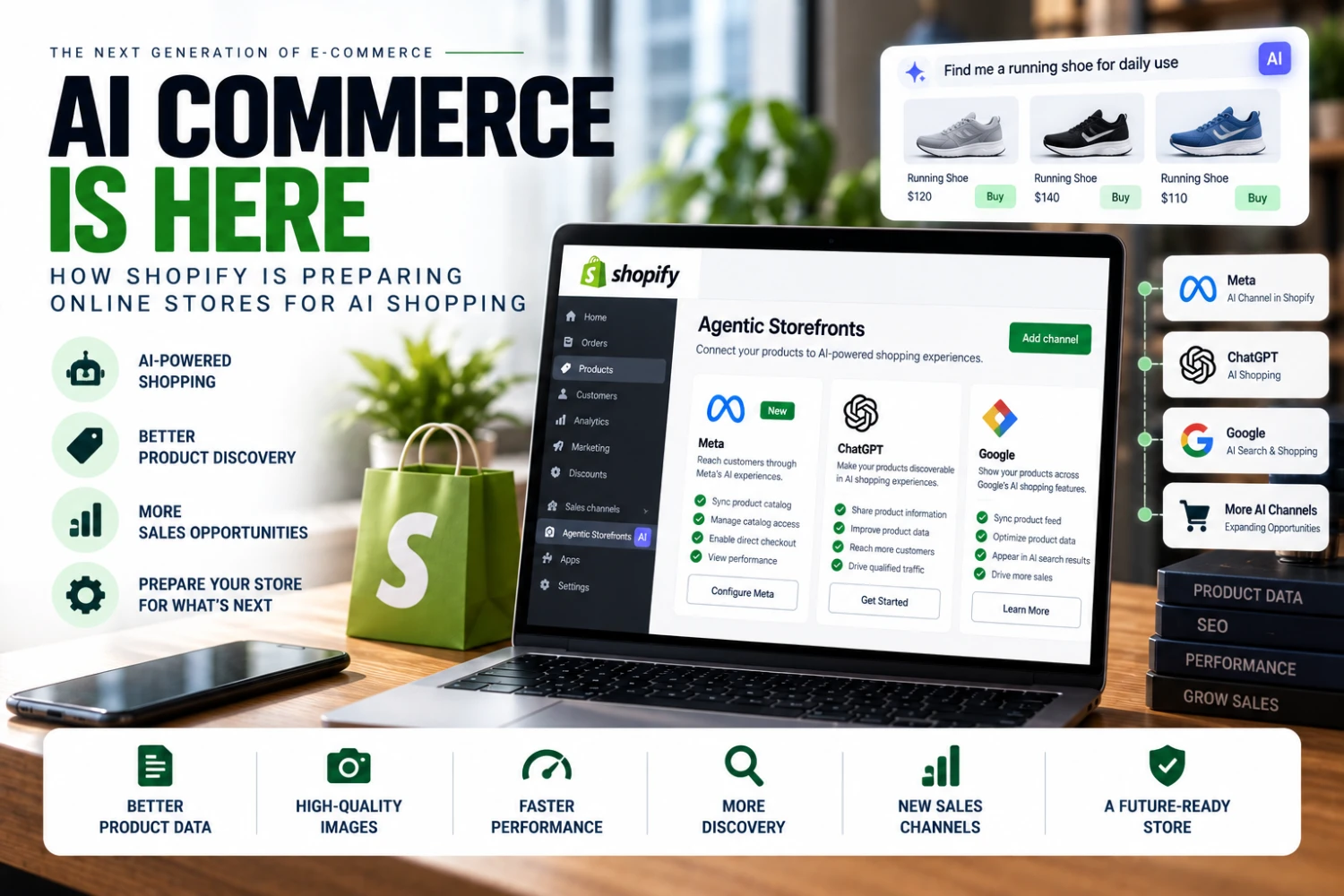
Shopify added Meta as an AI channel in Agentic Storefronts and improved rollout controls — here's what AI shopping means for online stores in 2026.
* indicates required fields
GET STARTED